




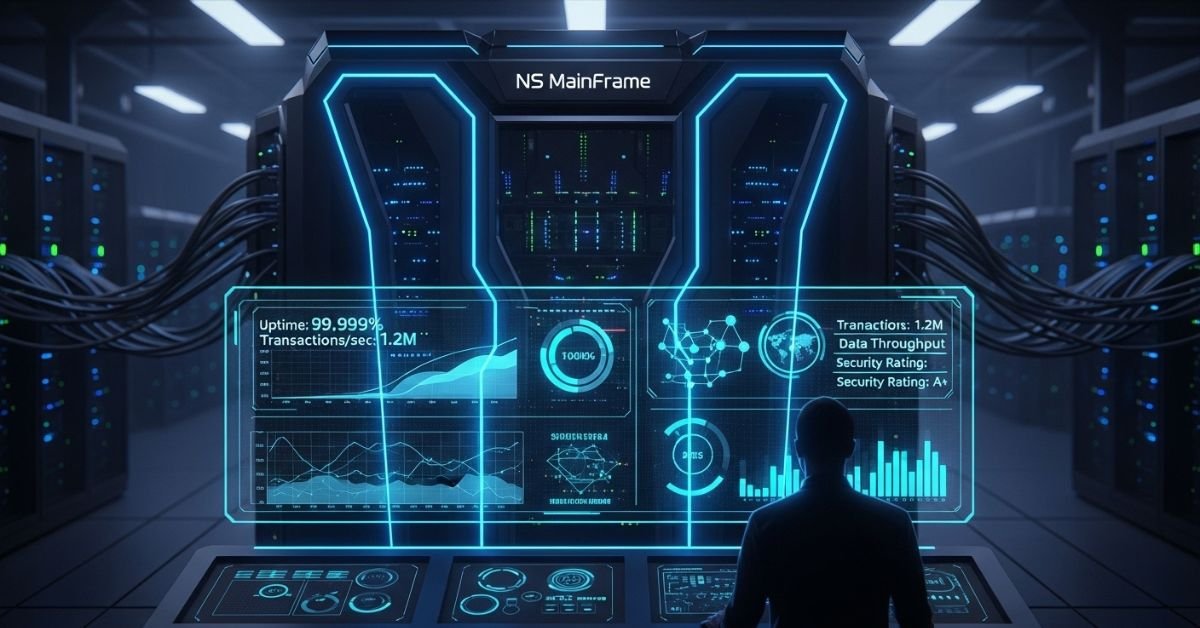
Introduction to NS Mainframe
The term “NS Mainframe” comes up frequently when discussing enterprise computing in today’s technologically advanced environment. Yet, its precise meaning remains unclear. Mainframes continue to play a crucial role in maintaining the efficiency and dependability of enterprises. Companies’ data and process management has been greatly influenced by these sophisticated devices’ evolution over the years. Robust and long-lasting solutions are provided by NS Mainframe systems in industries like as banking and healthcare. We will explore its background, characteristics, and current significance to see why it is still an important part of the digital world.
History and Evolution of Mainframe Computers
The history of mainframe computers is extensive, beginning in the 1950s. Their original form was that of enormous devices taking up whole rooms. Their principal function was to handle massive amounts of data and do intricate computations.
Similarly, mainframes evolved alongside new technologies. Transistors, which were introduced in the 1960s, reduced their size and increased their reliability. During this time, IBM’s System/360 line, which served as a benchmark for subsequent designs, was the undisputed market leader.
In the ’80s and ’90s, rival personal computers appeared. Mainframes, on the other hand, improved performance measurements and integrated networking capabilities to adapt.
Decades of advancement are reflected in the modern NS Mainframe. Meeting the demands of modern businesses is made easier with its combination of state-of-the-art hardware and powerful software solutions. The ability of these systems to adapt to a constantly evolving tech landscape is demonstrated by their evolution.
Features of NS Mainframe
Reliability is a hallmark of NS Mainframe systems. Ideal for mission-critical applications, they can run continuously without interruption.
Expandability is yet another important quality. With little to no downtime or interruption to ongoing processes, organizations can readily increase their capacity by acquiring more resources.
With NS Mainframes, security is a top priority. To keep sensitive information safe from cybercriminals and other unwanted parties, they use measures like enhanced encryption and access control.
Also, the performance is top-notch. With these systems, thousands of users may trade quickly and efficiently, even when dealing with massive amounts of data.
The ability to integrate stands out as well. Organizations can make the most of their current investments in IT infrastructure thanks to the NS Mainframes’ compatibility with various technologies and platforms.
You May Like : MataRecycler: Smart Recycling Tech for a Greener Future
The Role of Mainframe in the Modern Business World
In today’s corporate world, mainframes are indispensable. They handle massive volumes of data with unparalleled efficiency, making them indispensable for large-scale computing.
Businesses depend on NS mainframes to manage mission-critical applications reliably and with high availability. In sectors where interruptions can result in substantial losses, such as healthcare and banking, this is of the utmost importance.
On top of that, these powerful devices are masters at handling numerous tasks all at once. Companies gain when they can handle a large number of users without slowing down or sacrificing performance.
Another important area where mainframes excel is in security. They give businesses who deal with sensitive data peace of mind thanks to their built-in security safeguards.
The importance of the NS mainframe cannot be overstated as businesses undergo digital transformation. Its ability to connect to cloud services makes it more adaptable, scalable, and operationally controlled.
Enterprise Uses and Benefits of NS Mainframe
NS Mainframe rapidly processes complicated transactions and massive volumes of data, making it the backbone of many organizations. In order to safely handle millions of transactions every day, banking institutions depend significantly on its strong architecture.
Big Box stores use NS Mainframes for tracking inventories and analyzing sales data. The system’s database integration capabilities simplify activities across different channels.
Access to patient data in real-time allows healthcare institutions to make swift decisions in critical situations. This dependability is of the utmost importance when every second matters.
Additionally, NS Mainframe provides scalability that can handle expansion without sacrificing performance. Businesses may easily adjust their mainframe systems to meet growing demands as they expand.
Efficiency and low downtime contribute to these systems’ long-term cost savings, which is a major consideration. The long-term financial benefits of implementing such technologies are well-received by businesses.
Challenges and Limitations of Mainframe Technology
There are a number of difficulties associated with mainframe technology, notwithstanding its remarkable potential. A lot of companies don’t implement or upgrade their systems because of how expensive it is. The gear itself, as well as the initial expenditure in maintenance and personnel, can be somewhat expensive.
There is also the issue of a lack of qualified workers. Fewer individuals are being educated in mainframe operations due to the emergence of newer technology. Inefficiencies in operations may result from this lack of expertise.
Another difficulty is integration. These days, a lot of businesses use apps that aren’t always compatible with older mainframes. Filling in this gap calls for patience and knowledge of the subject matter.
Furthermore, mainframes may not be up to the task of processing data in real-time when contrasted with more nimble cloud systems, even though they are masters at managing massive amounts of transactions. Businesses should consider the pros and cons of these restrictions before committing completely to an NS mainframe system.
Future Outlook for NS Mainframe
New technology is becoming more and more interwoven with NS Mainframe’s future. Companies still need powerful data processing skills as they adjust to the fast digital transition.
It is believed that NS Mainframes will be very good at cloud integration. Organizations can improve their agility while still enjoying the durability of mainframes by utilizing hybrid cloud environments.
Mainframe operations will also be greatly influenced by artificial intelligence and machine learning. More than ever before, businesses can optimize performance and streamline workflows with predictive analytics.
Furthermore, NS Mainframes will remain crucial in protecting sensitive information owing to their excellent encryption features and natural stability, even as security threats increase.
In a rapidly changing business world that values efficiency and innovation, the future looks bright for NS Mainframe technology, according to the current scenario.
Conclusion: Why NS Mainframe is Still Relevant in Today’s Digital Age
In spite of all the challenges posed by the modern digital world, the NS Mainframe remains an indispensable part of business computing. Businesses that prioritize security and dependability rely on its strong architecture and data processing capabilities.
Because of its processing power and unparalleled scalability, NS Mainframe is used by organizations in a wide variety of industries. They are able to swiftly adjust to shifting market needs without sacrificing performance because of this. By connecting legacy systems with cutting-edge solutions, cloud integration increases its usefulness.
On top of that, competent experts are starting to see the importance of mainframe knowledge. Jobs in this industry are expanding at a rapid pace due to the high demand for skilled workers who are conversant with legacy systems.
Businesses who are serious about future-proofing their business continue to invest in mainframe technology. Mainframes from NS are well-positioned in today’s IT scene thanks to the incorporation of developing breakthroughs like AI and machine learning into these platforms.
Businesses rely on NS Mainframes to keep running smoothly and efficiently in this demanding world because of their combination of proven reliability with cutting-edge improvements.
Read More : Valplekar: Meaning, Origin & Modern Uses